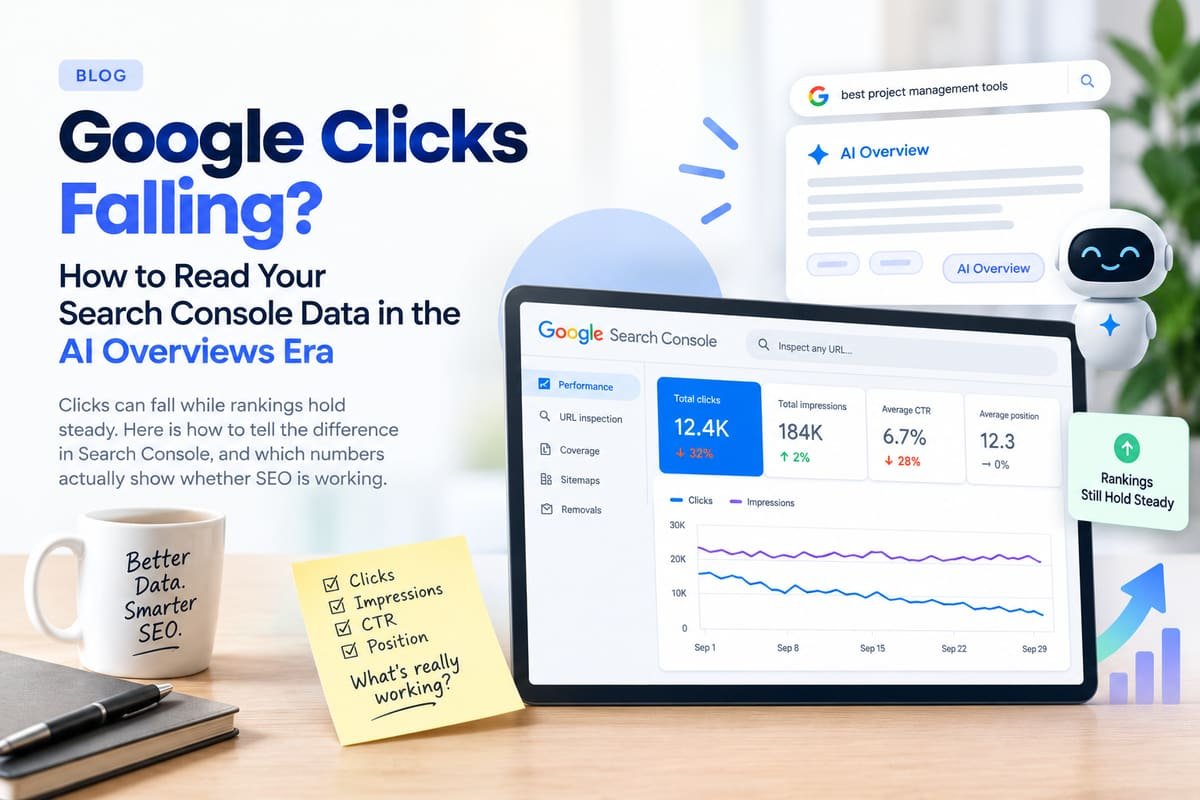
Why might clicks fall when rankings do not?
Search results used to be a list of links. For many questions they now begin with an AI-written summary, with links to sources underneath or beside it. If the summary answers the question, fewer people click through.
The best independent evidence we have is from Pew Research Center. It tracked the real browsing of 900 US adults in March 2025 and found people clicked a traditional result in 8% of visits when an AI summary appeared, against 15% when it did not. Clicks on the links inside the summary itself happened in only 1% of visits. That is US data from 2025, so treat it as an indication of direction, not a prediction for your UK business. Even so, it explains why a page can hold its position and still see fewer visits.
The effect is not even. Simple, factual questions are the most exposed. Searches with a clear buying or enquiry intent, such as "emergency plumber Leeds" or "accountant for small business", are far less likely to be fully answered by a summary.
What does Search Console's generative AI report show?
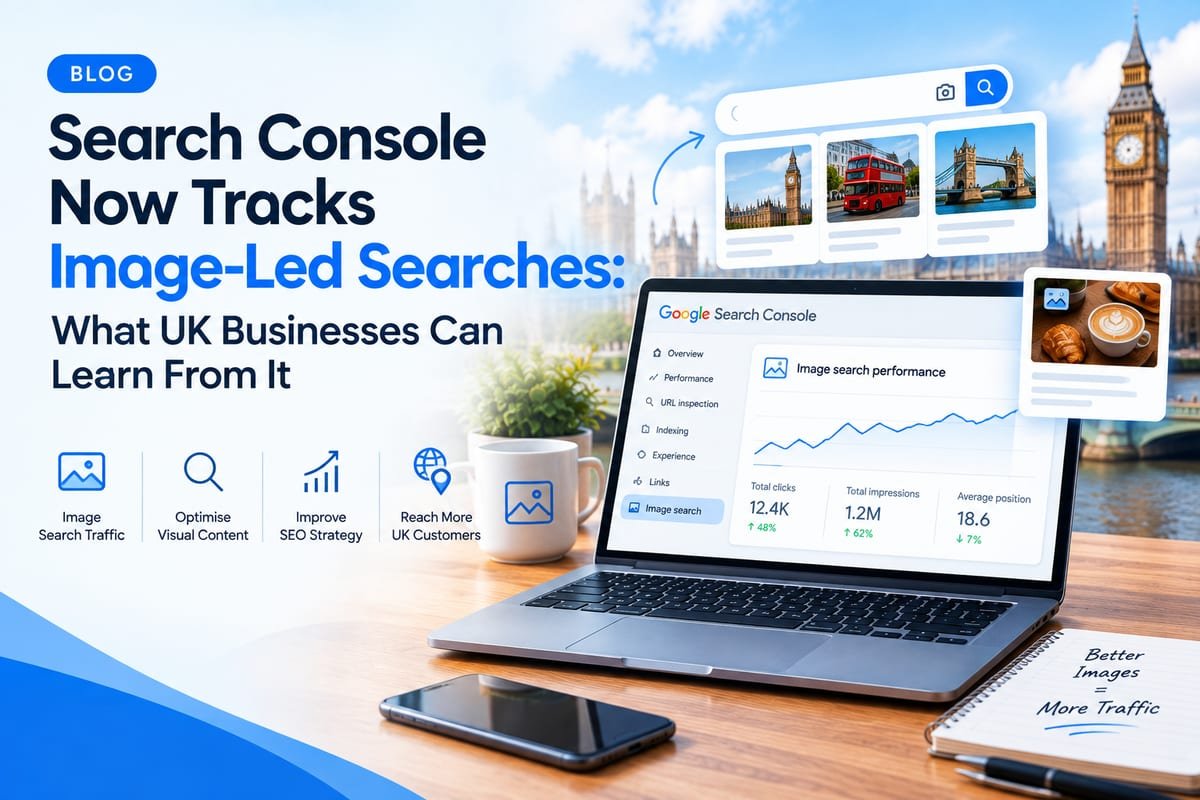
Google added a generative AI performance report to Search Console in June 2026. According to Google's Search Console help page, it shows how many times links to your site were shown in generative AI features on Google Search, currently AI Overviews and AI Mode. You can break the data down by page, country, device, date and search type.
Two limits matter:
- It shows impressions only, not clicks. You can see where you are being surfaced, but not how many visits that produced.
- It may not show for every site. Google says it has rolled out to all websites worldwide, but it can be unavailable if a site has too few impressions or has opted out of generative AI features.
So the report answers "are we being used in AI answers?" It does not answer "is it bringing us business?".
How do you diagnose a click drop in Search Console?
Open the standard Performance report, compare the last three months with the previous three, and work through these checks in order.
- Look at impressions and average position first. If both are stable but clicks are down, search behaviour has changed, not your rankings.
- If impressions or position have dropped, the cause is more likely a ranking change, lost pages, a technical problem or a site migration. See our guide to redesigning without losing rankings.
- Split queries into question-style and commercial. Falls concentrated in "what is" and "how to" searches are expected. Falls on service and location searches deserve attention.
- Check the pages, not just the site. Blog and guide pages often lose clicks while service and contact pages hold steady. That is a different situation from a site-wide drop.
- Open the generative AI report if you have it. Pages with rising AI impressions and falling clicks are being used in answers, which is a visibility signal worth protecting.
Which numbers show whether SEO is still working?
Clicks are a means, not the goal. For a service business the goal is enquiries, so build your reporting around those:
- Enquiries from organic search. Track form submissions, calls and bookings as conversions in Google Analytics 4, and filter by organic search.
- Impressions and average position for the 10 to 20 searches that matter most commercially.
- Branded searches. More people searching your business name is a good sign that AI answers and other channels are building awareness.
- Local actions from your Google Business Profile: calls, direction requests and website visits. See our local SEO guide.
- "How did you hear about us?" on enquiry forms and phone calls. Customers increasingly mention AI assistants.
If clicks fall 15% but organic enquiries are flat or up, SEO is working. If clicks hold but enquiries fall, the problem is more likely your page content, speed or enquiry form than your visibility.
What should you do about it?
You cannot stop AI Overviews appearing, but you can adjust where you put effort:
- Protect the pages that earn enquiries. Keep service and location pages fast, clear and up to date. Our Core Web Vitals guide covers the speed side.
- Stop relying on easy-answer content for traffic. Short definitions are the pages most likely to be summarised away. Add original detail: your pricing approach, UK-specific rules, examples from your own work.
- Make it easy to be cited. Clear answers, question-based headings and structured data help. We cover this in AI Search, AEO and GEO.
- Report enquiries to your team monthly, alongside clicks, so a traffic dip is read in context.
If you want help setting up conversion tracking or a clearer monthly SEO report, our SEO service starts with an audit of what you are measuring today.
Sources and further reading
Written by
Eirmon Solutions Editorial TeamWeb, SEO and marketing team
Practical guides on web design, SEO, AI and digital marketing from the Eirmon Solutions team, written for UK business owners and checked against the sources listed with each article.